Sep 14, 2026Product News
OEM and ODM Customization: Colors, Logos, Molds and TSA Locks
What can be changed on a ride-on suitcase, what it costs and how long it takes — colour and logo work, printed colour boxes, new shell moulds, speed options and TSA lock upgrades.
Where Customization Starts
Most buyers begin with the two changes that carry no tooling cost: colour and logo. Both sit at the finishing stage of production, which is why they can be introduced into a repeat order without re-engineering the product.
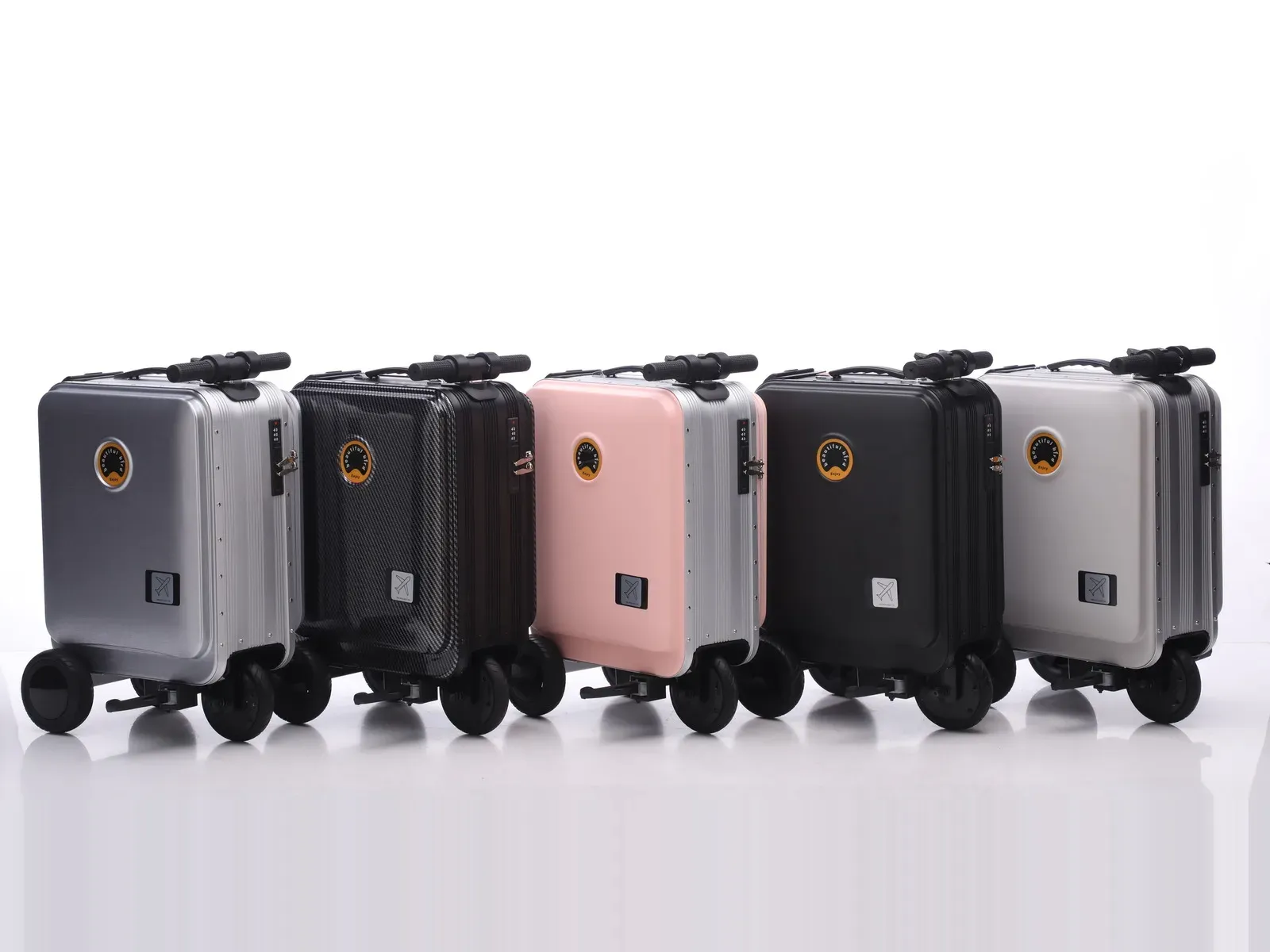
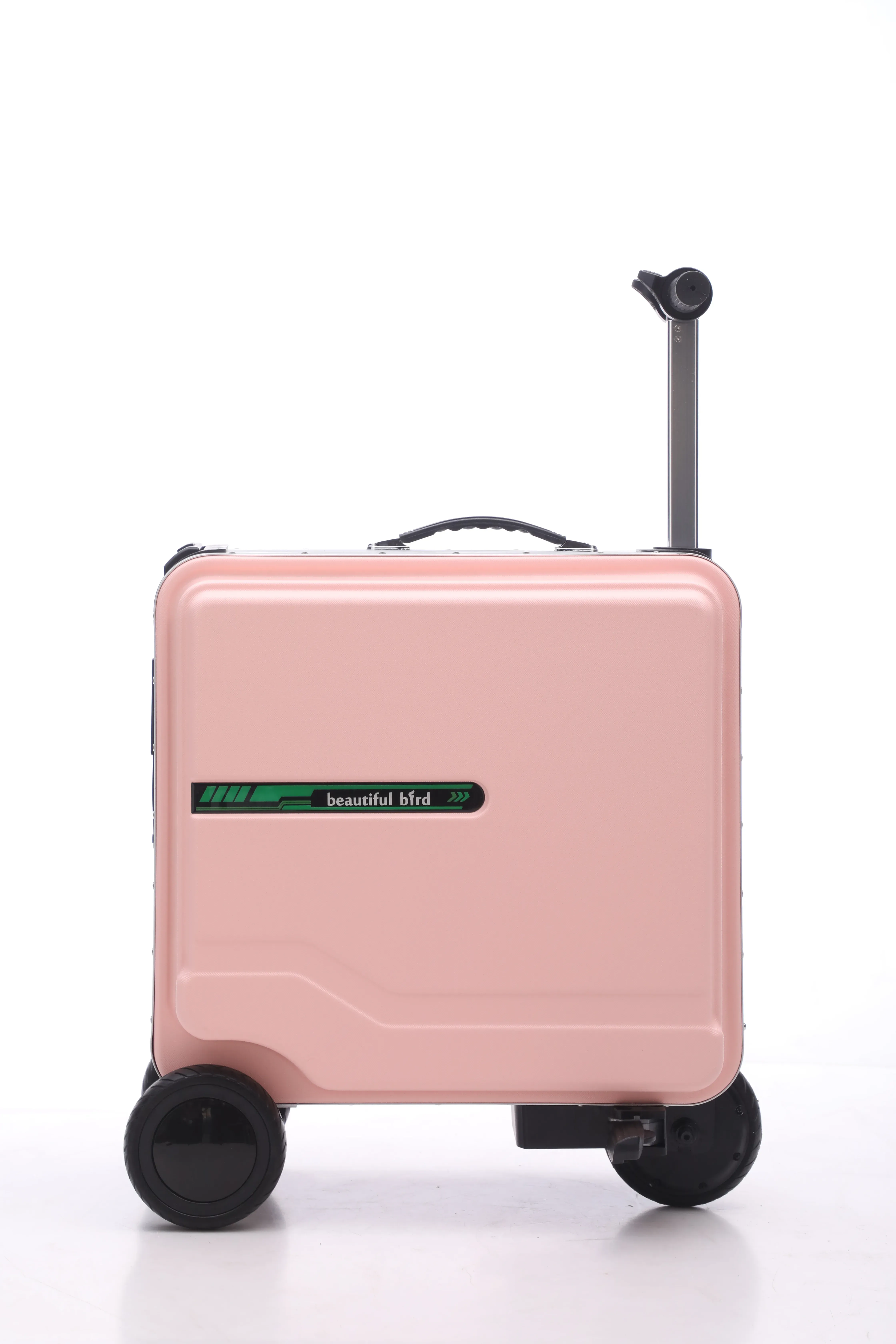
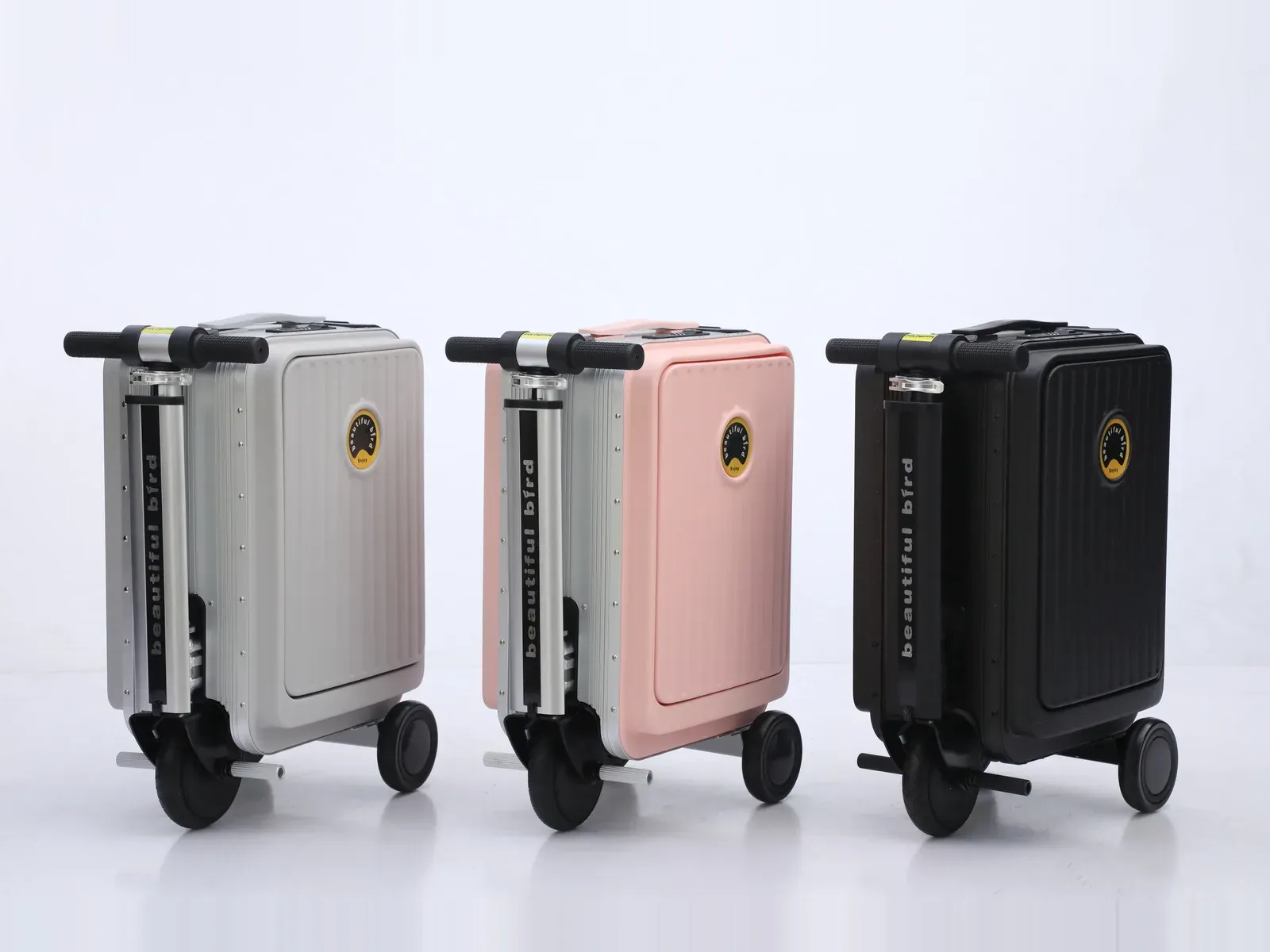
Colour availability differs by model. Black, silver and pink appear across most of the range, light grey appears on the 666 and the 188, 198, 968 and 988 FLAT, and a carbon-fibre black finish is available on the 918 FLAT, 666 and 988 FLAT. A buyer's target palette should be checked against the specific model rather than against the range as a whole, because a colour held on one shell may not be held on another.
Logo work and a printed colour box are the other two finishing-stage changes, and both are routine for us. This is where the export brand BEAUTIFUL BIRD sits when a buyer wants a ready-made brand rather than their own, and where a buyer's own mark sits when they want the unit to carry their identity instead.
Selling Under Your Own Brand
A buyer may sell these units under their own brand. The minimum order quantity for that arrangement is 300 pieces, which is higher than the standard order minimum of 10 pieces because branded production involves a print run, packaging artwork and a colour-consistency check rather than a stock pick.
The standard order minimum of 10 pieces remains available for buyers who want to test the product under our brand or unbranded before committing to a branded run. Models can be mixed inside that minimum, so a buyer can place a small multi-model order first and convert to a branded programme once a model has proven itself.
Shell and Mould Work
Changing the shell itself is a tooling project rather than a finishing option, and it is where the real differentiation in this category is available.
We hold our own moulds, so a shell change does not depend on a third party's tooling schedule. A new mould or a significant modification runs 45 to 60 days and costs between RMB 100,000 and RMB 300,000 depending on the part. The cost is negotiated case by case and carried by the buyer who commissions the tooling.
Two practical points are worth planning around. The first is sequencing: a mould project sits ahead of a first production order, not inside it, so a buyer working to a seasonal window should start tooling early. The second is that a new shell can change the unit's outer dimensions or capacity, which affects both the carton data and the container loading figure, and therefore the landed cost. Buyers commissioning a shell should ask for revised loading figures along with the mould quotation.
Speed and Electrical Changes
Speed is on the list of things that can be adjusted, but it is important to be precise about what that means.
The electrical system is shared across the range: a 200 W motor, a 37 V 2600 mAh detachable battery rated at 96.2 Wh, a rated load of 110 kg, a top speed of 13 km/h and a range of 12 km. Our CE-EMC, FCC SDoC and RoHS documentation was issued against that tested configuration, and the certificate file records the model families it covers.
A change to speed, motor, controller or battery takes the product outside that tested configuration. That does not make the change impossible, but it makes it a compliance project rather than a cosmetic option: a modified electrical build needs its own test file before it can carry a CE, FCC or RoHS claim. Buyers considering an electrical change should raise it as a development brief with a realistic timeline, and should not expect a modified unit to inherit the paperwork of the standard build.
What Cannot Be Added
One customization request comes up in this category and cannot be met: these units have no remote locking, no remote tracking and no connectivity feature of any kind, and that is a design decision rather than a missing option. A buyer whose market expects a case to be locked and unlocked from a distance should treat that as a new product development programme rather than a specification option.
The upside of that decision is compliance scope. The electrical file on these models is CE-EMC, FCC SDoC and RoHS, which is the set that applies to a motorised case and the set we hold for the certified model families. A buyer's checklist for connected products can be marked not applicable, and a buyer who needs a connected product should price the certification work as part of the development programme rather than assume it can be added to the existing file.
Locks, Accessories and Small Changes
The most common specification change after colour is the lock. The standard lock is not TSA, and a TSA lock can be fitted for an additional USD 1 to 1.5 per unit. For any market where travellers check baggage into the United States, that upgrade is close to mandatory in practice, and it is worth pricing into a first quotation rather than adding later.
Beyond the lock, buyers should treat small accessory requests — interior liners, handles, branding pieces, retail packaging inserts — as items to be agreed against the spare parts list, because the telescopic handle, wheels, controller and wiring harnesses are the components we already hold in service stock. A request that stays inside that component set is straightforward. A request that changes the drive system is the electrical change described above, and should be scoped and costed on its own.